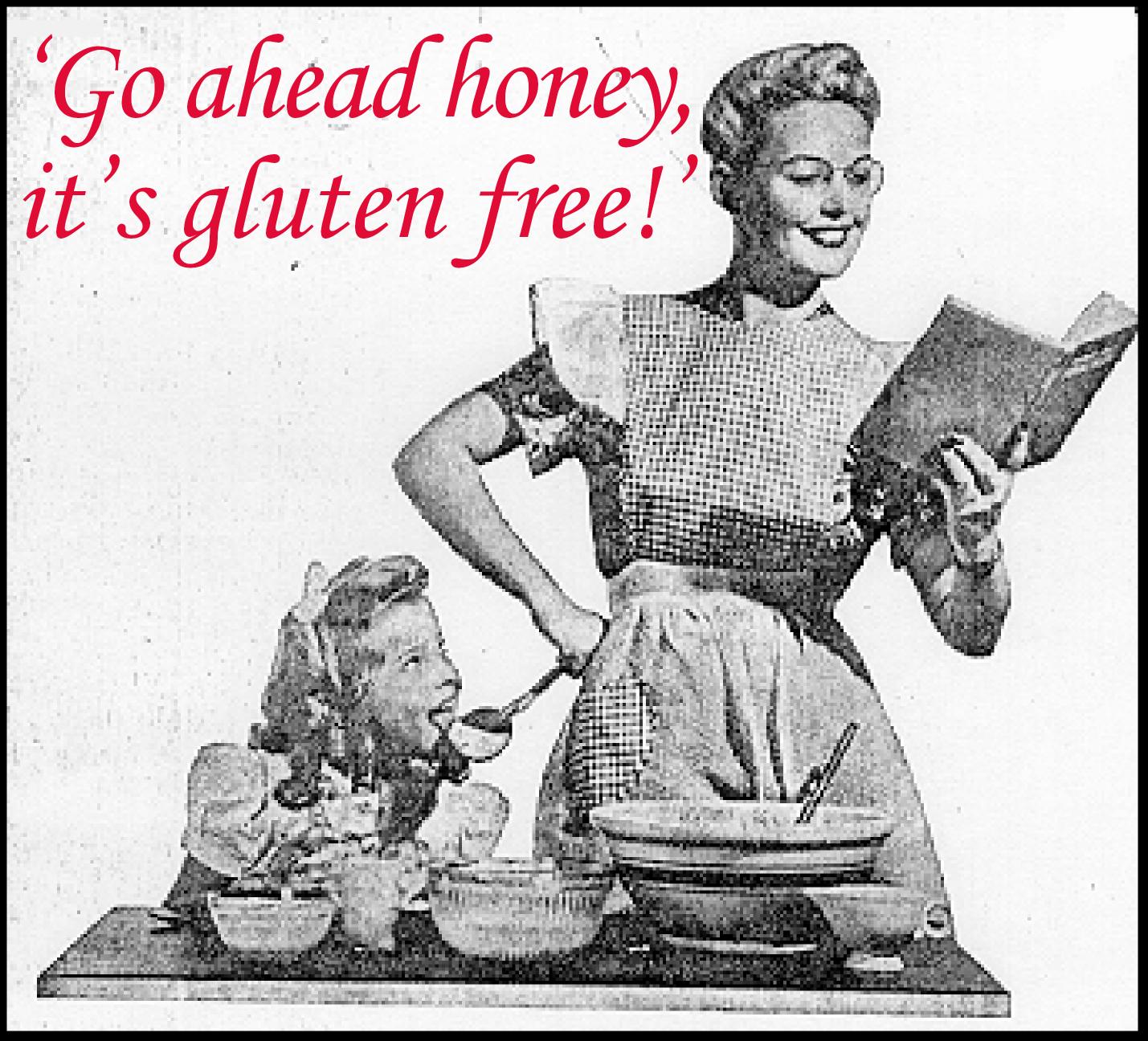
Does Gluten-Free Mean You Will Lose Weight?

Celiac sufferers and those with non-Celiac gluten sensitivity (and I believe I am gluten sensitive) need to avoid the wheat protein for their health.

You have to look at labels and pick wisely, because many gluten-free items still have a lot of carbs.  So, if that blueberry muffin is now only 25g of carbs vs. 50g of the regular muffin, you are still eating 25g of carbs!  If there is little to no protein or fiber to balance that out, you are still eating a dessert!  If you want to only eat 50 to 100g of carbs a day to lose weight and you have that 25g of carb muffin–well, you do the math on what you have left for the rest of the day.

I found a place that serves gluten-free pizza crust for a one-sized pizza.  I called the company and found out the lowest carb item on the menu was this particular pizza that was gluten-free and it was 42g of carbs for the whole pizza.  Well, I split that pizza with my husband and had salad with it instead of eating the whole pizza.  I ended up with 25g of carbs for this meal and balanced it out the rest of the day with low-carb foods like eggs, meat, veggies and low-fat cheeses.  Therefore, I did not gain and I actually lost weight.

If you already have a healthy diet, gluten-free diets will not aid weight loss. For those who subsist mostly on pasta, pizza and other gluten-filled foods, a change to gluten-free lean proteins and veggies will obviously lead to weight loss — though it won’t be the lack of gluten that’s shedding the pounds. 
go-ahead-its-gluten-free
So, please be aware that gluten-free does not mean carb-free!

6 strategies for New Year Resolution of Successful Weight Loss

20130102-235834.jpg

It is a new year. 2013. What will you do this year for yourself?

What will be your goals? How about working out more and eating well? How a out losing some weight?

How do you make those permanent changes? Six strategies for weight-loss success.

1. Make a commitment

Permanent weight loss takes time and effort — and a lifelong commitment. Make sure that you’re ready to make permanent changes and that you do so for the right reasons.

To stay committed to your weight loss, you need to be focused. It takes a lot of mental and physical energy to change your habits. So as you’re planning new weight-loss-related lifestyle changes, make a plan to address other stresses in your life and don’t allow them to interfere in your personal needs.

2. Find your inner motivation

No one else can make you lose weight. You must undertake diet and exercise changes to please yourself. What’s going to give you the drive to stick to your weight-loss plan? Make a list of what’s important to you to help stay motivated and focused.

While you have to take responsibility for your own behavior for successful weight loss, it helps to have support — of the right kind. Pick people to support you who will encourage you in positive ways, without shame, embarrassment or sabotage. Ideally, find people who will listen to your concerns and feelings, spend time exercising with you or creating healthy menus, and who will share the priority you’ve placed on developing a healthier lifestyle. For addictive issues, comsider joining Overeater’s Anonymous. There are meetings everywhere and they are free. Your support group can also offer accountability, which can be a strong motivation to stick to your weight-loss goals. If you prefer to keep your weight-loss plans private, be accountable to yourself by having regular weigh-ins and recording your diet and exercise progress in a journal.

3. Set realistic goals

It may seem obvious to set realistic weight-loss goals. But do you really know what’s realistic? Over the long term, it’s best to aim for losing 1 to 2 pounds per week, although initially you might lose weight more quickly than that if you make significant changes — just be sure the changes are health supporting. To lose 1 to 2 pounds a week, you need to burn 500 to 1,000 calories more than you consume each day, through a lower calorie diet and regular exercise.

It isn’t essential that you have an outcome goal, but you should set process goals because changing your processes — your habits — is a key to weight loss. Also make sure that your goals are SMART: specific, measurable, attainable, relevant and time-limited. An example of a SMART goal is aiming to walk for 30 minutes a day, five days a week for the next three months, and logging your results.

Weight loss: 6 strategies for success

4. Enjoy healthier foods

Adopting a new eating style that promotes weight loss must include lowering your total calorie intake. But decreasing calories need not mean giving up taste, satisfaction or even ease of meal preparation. One way you can lower your calorie intake is by eating more plant-based foods — fruits, vegetables and whole grains. Strive for variety to help you achieve your goals without giving up taste or nutrition.

In particular, get your weight loss started by eating a healthy breakfast every day; eating at least four servings of vegetables and three servings of fruits daily; and using healthy fats, such as olive oil, vegetable oils and nut butters. In addition, cut back on sugar, choose low-fat dairy products and keep meat consumption to a 3-ounce portion (about the size of a deck of cards).

5. Get active, stay active

The key to weight loss is burning more calories than you consume. Because 3,500 calories equals about 1 pound (0.5 kilogram) of fat, you need to burn 3,500 calories more than you take in to lose 1 pound. So if you cut 500 calories from your typical diet each day, you’d lose about 1 pound a week (500 calories x 7 days = 3,500 calories).

While you can lose weight without exercise, exercise plus calorie restriction can help give you the weight-loss edge. Exercise can help burn off the excess calories you can’t cut through diet alone. Exercise also offers numerous health benefits, including boosting your mood, strengthening your cardiovascular system and reducing your blood pressure. Exercise can also help in maintaining weight loss. Studies show that people who maintain their weight loss over the long term get regular physical activity.

6. Change your perspective

It’s not enough to eat healthy foods and exercise for only a few weeks or even months if you want long-term, successful weight loss. These habits must become a way of life. Lifestyle changes start with taking an honest look at your eating patterns and daily routine. After assessing your personal challenges to weight loss, try working out a strategy to gradually change habits and attitudes that have sabotaged your past efforts. And you have to move beyond simply recognizing your challenges — you have to plan for how you’ll deal with them if you’re going to succeed in losing weight once and for all.

You may have an occasional setback. But instead of giving up entirely after a setback, simply start fresh the next day. Remember that you’re planning to change your life. It won’t happen all at once. Stick to your healthy lifestyle and the results will be worth it.
Eat Lunch, Lose Weight

out_to_lunch

Of course the nutritional and calorie content of meals clearly affects weight loss, but a new study shows that the timing of meals may also play an important role in weight loss.  In a study of a Mediterranean population, those eating lunch later in the day were more likely to be successful in losing weight.

Eating a good breakfast and not skipping it and eating a lunch before 3pm was key to losing more weight and maintaining a balanced metabolism.  Timing on lunch was the only meal that really made a difference on weight loss.

So, eat your lunch at lunchtime.  NO skipping lunch!

Here is the article about why lunch is key to weight loss!

http://www.elements4health.com/what-and-when-you-eat-affects-weight-loss.html?utm_source=feedburner&utm_medium=email&utm_campaign=Feed%3A+elements4health%2FmTrh+%28Elements4Health+%29

I ate at The Counter and had a fantastic burger and gained no weight–how come?

I had a large delicious burger.  It was so good!  You don’t have to starve on a diet.  When you aren’t on maintenance like I am, you might have to eat 2/3 of what I ate, but you can still eat it.  That is the cool part!

So, here is a picture of my burger.

burger


So, let’s look at the carbs of my choices.  I gave up eating 40g of carbs by having my burger as a salad and not in a bun!


–My burger had NO carbs, and had a lot of protein.

–cheese had less than 1 carb.

–My couple of slices of tomatoes had maybe 1 g of carbs.

— My pickles had about 1 g of carbs.

–The lettuce had about 2g per cup and I had about 2 cups.  So, lettuce=4g of carbs.

Here is the hairy part.  

–You have to be so careful what you get.  I ordered sautéed onions.  This could be a problem.  If you look online at thecounterburger.com and look up their nutritional information, you will see that the whole plate worth is about 9g of carbs.  But, I only ate half.  So, 4.5 for me!

–I had the Dijon balsamic vinaigrette, but I only had half, so instead of 15,  I had maybe 10g of carbs.

I ate this whole thing and only had about 21g of carbs, which is really good for a larger meal.  I had to think carefully when ordering.  I tasted someone’s cookie and probably had another carb, but I did not have a dessert there.  I waited until later for Carbolite as my last protein of the day out of 6 and consumed 15g of carbs with that.  As long as I am between 50 and 100g of carbs a day (the closer to 50, the better), I am ok.

So you can have good food on a diet, just select carefully.  If I had the honey mustard  or ranch dressing, I could have sliced off another 5g of carbs.

So, eat, but choose wisely.


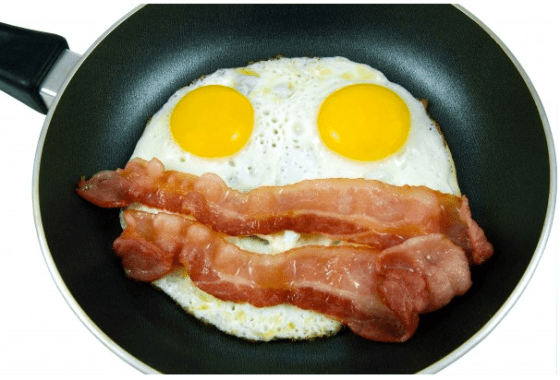
the KETOGENIC DIET: Turns out that a low-carb diet makes you thin AND delays the AGING PROCESS

eggsbacon

Reducing calories and eating low-carb foods, something scientists at the Gladstone Institutes call the Ketogenic Diet, could delay the aging process. According to a study headed up by Gladstone Senior Investigator Eric Verdin, MD, the development of this anti-aging ketogenic diet could help to eventually combat age-related diseases such as heart disease, cancer, and certain forms of mental deterioration.

http://www.sciencemag.org/content/early/2012/12/05/science.1227166.abstract

lowcarbzone

“Over the years, studies have found that restricting calories slows aging and increases longevity—however the mechanism of this effect has remained elusive,” Verdin said in a statement. “Here, we find that βOHB—the body’s major source of energy during exercise or fasting—blocks a class of enzymes that would otherwise promote oxidative stress, thus protecting cells from aging.”
Read more: http://www.voxxi.com/ketogenic-diet-low-carb-low-calorie/#ixzz2EswKVfaQ

Be Your Own Weight Loss Boss: 5 Steps to Set Up Your Own Success

Weight Loss Boss is a book  by David Kirchhoff, President and CEO of Weight Watchers, It is about  the struggle of losing weight and maintaining it by the head of one of the most successful weight loss brands in the world.

Kirchhoff’s advice and tips are realistic and practical for everyone, and his rules pave the way for a sustainable, healthy lifestyle.

boss

Here are 5 steps he talks about that you can use to set yourself up for your own success:

1. Willpower is overrated

When you rely on willpower alone you set yourself up to fail. Routine and habits will win out over willpower and this is why diets don’t work. They rely on short-term changes that no one can keep up!  I talk about this all of the time in my blog.  You have to prepare yourself.  At least once a week, you have to go shopping and buy all you need for the week to stay on track.  You need to have some ideas about the foods you need.  Most of it is protein choices, fruits and vegetables.  You also have to know what days and times you can exercise.  If you plan your everyday routine around exercise, nutritional meals, and reaching realistic goals, you set yourself up for success.

2. Create Good Habits

A good habit doesn’t require willpower or discipline. By definition, a habit comes automaticly and you don’t have to think about it. With a bad habit, you probably don’t think about it until you suffer the repercussions. Kirchhoff outlines the Formula for Behavioral Change created by B.J Fogg, a professor at Stanford. If there’s a habit you’re trying to shed, you need to be motivated to lose it. You need a reward (not food!) to make it worthwhile; you need the steps to get rid of it in the simplest way possible.. Finally, you need a new habit starter trigger. This can be anything from a personal trainer, exercise buddy, or  friend–who will remind you, or use your Google calendar or IPhone alarm clock to remind you and get you going.  It takes 4-6 weeks to internalize that trigger mechanism and establish a habit, and now is the best time to start!  So start and keep it going until it sticks.  Wallah-a new habit!

buffet

3. Managing your Environment

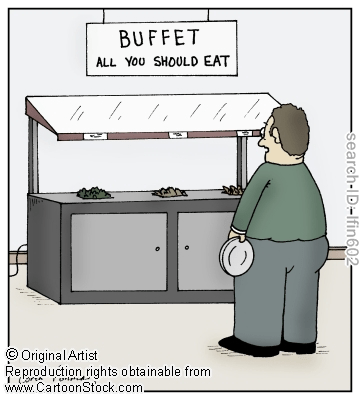
Kirchhoff says, “Out of sight, out of mouth” and don’t bring it in to your house or your office. Make the better alternatives for yourself easily accessible, and learn to predict what David calls “hot states” and “cold states.” Hot states are when you’re tossed into a situation where temptation is all around you, like a buffet at a busy conference that is filled with foods out of your normal routine that will kill your calorie budget and make you feel horrible afterwards. The best way to deal with these situations is with a plan when you are in a cold state, before temptations present themselves. Most of the time you can predict your “hot states” – our brains can get us in trouble with cravings, but they can also help us behave. The longer you’ve been practicing your routine, the less you’ll be prone to give in to a hot state situation.  I actually HATE buffets.  They are triggers for gluttony.

diet_buddy_logo1

4. Build a Support Network

We tend to think that we’re the only ones who are having a hard time, and everyone else eats well and exercises without any effort. Wrong! Opening up about your experience helps to hold you accountable for your actions. Before writing Weight Loss Boss, Kirchhoff started a blog called “Man Meets Scale” to share his struggles and triumphs with weight maintenance. He found that men and women opened up, and found encouragement to keep going and keep sharing. The more people who know about your goals and struggles, the more people are able to help and support you in your journey.  This is why I discussed my weight loss work and accomplishments on my Facebook and started a blog.  Some people NEED to go to meetings.  I started to enjoy going to Lindora for weigh ins and their positive encouragement.  I love the encouragement I get from my online support too.  And I have a couple of friends who work out with me or discuss working out with me and it is very motivating for all of us.  I also LOVE going to my yoga and Pilates classes because I have bonded with people there and we are all in it together!

5. It’s about Food & Exercise

It’s one thing to lose the weight, but how do you keep it off for the rest of your life? He talks a lot about maintenance: I am in the middle of that right now. THe key to maintaining weight loss is  continuously setting new goals and being accountable are the keys to maintaining weight loss. It’s a sobering truth that if you struggle with weight, you will always struggle with weight, but that doesn’t mean you’re doomed to live a life without enjoying food!   This is why I constantly look up new recipes, do them and write about them.  The best thing you can do for your relationship with food is to love food that loves you back. Stay away from the “bad girlfriends of food,” as Kirchhoff  calls them. They’re the ones that give you a quick thrill and make you feel like crap afterwards, leave you wanting more and are TERRIBLE for you in the long run. “Settle down” with great food, and you’ll be in a happy and satisfying commitment for life.  Make great food taste good and have fun with it.  Experiment.  I am learning to cook this year for the first time in my life and it is kind of fun and not as bad as I thought it would be.

All proceeds of “Weight Loss Boss” the book go to benefit Share Our Strength’s No Kid Hungry Campaign, a nonprofit dedicated to ending childhood hunger in America. You can check out “Weight Loss Boss” on Amazon and where books are sold. For more information visit www.ManMeetsScale.com


A Different Dieting Strategy that Works, according to research

A blog came out about a research study that came out a couple of years ago about DIET STRATEGY!

The research was on a few hundred overweight adults who had just been diagnosed with Type 2 diabetes and divided them into two groups.

Both groups were told that they would need to make changes to their diet in order to lose weight and manage their disease. They were told to limit their total caloric intake and instructed on things like portion sizes.

Beyond that, however, the two groups got different instructions.

Group 1 :

They were taught how to limit their intake of fat to no more than 30 percent of calories and to keep their saturated fat under 10 percent. They were also told to avoid sweets and refined grains.  Group 1 was told what not to eat.

*This is the standard prescription for a reduced-fat, low-calorie diet.

Lucky Group 2:

They were told to increase their intake of vegetables, fish, and poultry, to choose whole grains, and to use olive oil as their primary source of fat.  Group 2 was told what to eat more of.

*This is the standard Mediterranean diet prescription.

Four years later, Group 2 had lost more weight and was also only half as likely to need medication to control their blood sugar.

The group that focused on the positives rather than the negatives (eat more of vs. what not to eat) might be a much better strategy for handling that inner child who wants their dessert!

Instead of telling yourself or your child that they can’t have dessert until they finish their “healthy” meal, start buying things that are tasty and fun that are healthy as your desired treat.

When you go to the market, you or your child or both, can pick out seven different kinds of luscious fruit — a different one for every night of the week! The more exotic or unusual, the better. Having an apple every night after diner wouldn’t be that exciting. but different berries, etc. each night can be exciting.

Have different kinds of vegetables at dinner — each prepared in a tasty way (grilled, sauteed, etc) — which completely takes the sting out of eliminating the bread, rolls and other minimally-nutritious starches.  I love asparagus grilled with olive oil and garlic.  So tasty and doesn’t take long to do.

And instead of going out for pizza, Italian or Chinese food and exhausting your willpower on not eating all the pasta — or heading to a burger bar and drooling over my the  fries  — I try to find enticing restaurants that are more in line with my dietary strategy, such as a tapas place, a place with excellent salad choices or a salad bar, or healthy chicken or turkey choices as in a Mediterranean restaurant. 

So, the moral of the story.  Learn some variety, learn to cook different ways and different vegetables, learn about different fruits, be creative and experimental and try new things and find new restaurants and try the healthy foods and find the ones that you love.

I am going to include a picture of my BBQ meal from the other night.  My husband wanted BBQ.  So, I had BBQ meat and grilled asparagus and steamed broccoli and a side salad.  I was full and outside of some, but not a lot of sugary BBQ sauce, my meal was very low in carbs and I didn’t gain any weight.  I split the meat with my husband so it wasn’t too much.  A little tri-tip and a few baby back ribs.  No rolls, no fries or onion rings, no appetizers.  This was plenty food (especially with the salad).

Now, come on, seriously…….doesn”t that look good?  Diet food does not have to be awful!

You have to change your old bad habits. If you want to be thin, this is what you have to do and it isn’t hard.  FOCUS on the positive!  New delicious veggies, fruits, meats, eggs and cheeses!  Find some protein bars that you like.  Stay away from the chips, potatoes, fried and breaded/wheat-filled things.  Eat small and often, every 3-4 hours.  Drink sugar-free liquids.  The weight will fall off.

ideas taken from:  http://www.huffingtonpost.com/monica-reinagel-ms-ldn-cns/diet-tricks_b_2069087.html?ncid=edlinkusaolp00000003

IT IS ALL GREEK TO ME! Greek Yogurts!

In the past year or two, Greek Yogurt has been taking over as “the” yogurt of choice.  It is tangier, less sweet and creamier.

Is Greek Yogurt healthier?  Better for you diet?

Both Greek and regular yogurt, in their plain, nonfat or low-fat forms, can be part of a healthful diet. They are both low in calories,  and a great source of calcium and live bacterial cultures. But our Mediterranean friend—which is strained extensively to remove much of the liquid whey, lactose, and sugar, giving it its thick consistency—does have an edge.It can be about the same amount of calories (although I have noticed that regular yogurt tends to have more carbs), it can pack up to double the protein, while cutting sugar content by half.   All that, and it tastes great too.

What is so good about it?  

(The following will explain how Greek Yogurt has half the sodium, more calcium and protein and less carbohydrates than regular yogurt.)

PROTEIN:

Greek yogurt is high in protein, which helps promote fullness.

A typical 6-ounce serving contains 15 to 20 grams, the amount in 2 to 3 ounces of lean meat. That makes it particularly appealing to vegetarians, who sometimes struggle to get enough of the nutrient. An identical serving of regular yogurt, on the other hand, provides just 9 grams, meaning you may feel hunger pangs sooner.

CALCIUM:

Regular yogurt provides 30 percent of the federal government’s recommended daily amount. Greek yogurt loses some of its calcium through the straining process, but still packs a wallop. A 6-ounce cup typically supplies about 20 percent of the daily recommendation. If you’re still worried about calcium intake, load up on milk, seeds, and almonds, says Sarah Krieger, a registered dietician and spokeswoman for the American Dietetic Association.

Be wary of Greek yogurt’s fat content. In just 7 ounces, Fage’s full-fat Greek yogurt packs 16 grams of saturated fat—or 80 percent of your total daily allowance if you’re on a 2,000-calorie diet. (That’s more than in three Snickers bars.) Dannon’s regular full-fat yogurt has 5 grams of saturated fat in an 8-ounce serving. Saturated fat raises total and “BAD” LDL choesterol, increasing the risk for heart disease. Read nutrition labels carefully. If you’re going Greek, stick to low-fat and fat-free versions.

SODIUM:

A serving of Greek yogurt averages 50 milligrams of sodium—about half the amount in most brands of the regular kind. (Low-sodium versions of regular yogurt are available.) Too much salt can boost blood pressure and increase the risk of other heart problems. The federal government’s 2010 Dietary Guidelines urge Americans to cap sodium at 2,300 milligrams a day or 1500 if 55 plus.

CARBOHYRATES:

 Going Greek is a smart choice for low-carb diets. It contains roughly half the carbs as the regular kind—5 to 8 grams per serving compared with 13 to 17. Plus, the straining process removes some of the milk sugar, lactose, making Greek yogurt less likely to upset the lactose-intolerant. However, some of the Greek Yogurts are flavored and do have high amounts of carbs.  Fage is a good example of different choices and different amounts of carbohydrates.  If you get the plain, non-fat, there are 7g of carbs.  But, as soon as you add a flavor, it goes up to 17g or more carbs.  http://www.fageusa.com/products/fage-total-0-percent/.

However, I like Danon Lite and Fit (get it in bulk at Costco).  It has only 8g of carbs per tub and it is flavored.

You have to look at all of the choices and look at the labels yourselves.  I noticed online that Dannon has one with less sugar for diabetics, Dannon – Diabetic Friendly Light & Fit Carb & Sugar Control Yogurt.  It is only 3g of carbs…however, the store locator said it was not selling around my house and I would have to travel 18 miles to get it.  So, for now, I am stuck with 8g of carbs until I can perhaps get my local market to order it.  http://www.dannon.com/storelocator.aspx


CONCLUSION:

It also has many uses.  Mix it in some berries or high-fiber granola. You can also substitute Greek yogurt for sour cream for example.  It’s an acceptable replacement for fatty ingredients like cream cheese, mayonnaise, and butter. Its texture makes it an excellent swap for mayonnaise on sandwiches, or in dishes like potato salad, egg or pasta salad, and coleslaw.

But, the great news is that it tastes great and Greek yogurt seems to have a nutritional edge over regular yogurt.  But both kinds of yogurt help you lose weight by keeping you full on fewer calories. The key is sticking to plain, nonfat, or low-fat varieties and LOOK at labels.


10 Ways to Boost Your Metabolism

It is important to boost your metabolism if you want to keep thin.  The body will burn more calories with a quicker metabolism than one that is just at rest.

So, here are 10 ways to do it:

1. BUILD MUSCLE:

Our bodies constantly burn calories, even when we’re doing nothing. This resting metabolic rate is much higher in people with more muscle. Every pound of muscle uses about 6 calories a day just to sustain itself, while each pound of fat burns only 2 calories daily. That small difference can add up over time.

2.  STEP UP YOUR WORKOUT:

Aerobic exercise may not build big muscles, but it can rev up your metabolism in the hours after a workout. The key is to push yourself.  When you are walking, burst into fast walking here and there.  Push yourself.

3.  FUEL UP WITH WATER:

The body needs water to process calories. If you are even mildly dehydrated, your metabolism may slow down. In one study, adults who drank eight or more glasses of water a day burned more calories than those who drank four. To stay hydrated, drink a glass of water or other unsweetened beverage before every meal and snack. In addition, try munching on fresh fruits and vegetables, which are full of fluid, rather than pretzels or chips.

4.  ENERGY DRINKS: (low carb and low sugar!  Check the label!)

Some ingredients in energy drinks can give your metabolism a boost. They’re full of caffeine which increases the amount of energy your body uses. They sometimes have taurine, an amino acid. Taurine can speed up your metabolism and may help burn fat. But using these drinks can cause problems like high blood pressure, anxiety, and sleep issues for some people. The American Academy of Pediatrics doesn’t recommend them for kids and teens.

5.  SINLESS PROTEIN SNACKS BETWEEN MEALS:

Having a small protein meal or snack every 3 to 4 hours keeps your metabolism cranking, so you burn more calories over the course of a day. Several studies have also shown that people who snack regularly eat less at meal time.

6. SPICE UP YOUR MEALS:

Spicy foods contain chemical compounds that can kick the metabolism into a higher gear. Eating a tablespoon of chopped red or green chili pepper can boost your metabolic rate.  I sell Capio tablets that are made with the ingredients of spices and I take them every morning to spice up my metabolism.

7.  POWER UP WITH PROTEIN:

The body burns many more calories digesting protein as it uses for fat or carbohydrates. Although you want to eat a balanced diet, replacing some carbs with lean, protein-rich foods can boost the metabolism at mealtime. Healthy sources of protein include lean beef, turkey, fish, white meat chicken, tofu, nuts, beans, eggs, and low-fat dairy products. I, personally, do not like to eat beans unless I am going to work out.  They are high in carbs.  Nuts can be too, so you have to watch how much of them you eat.

8.  BEST NEWS IS YOU SHOULD DRINK COFFEE!

Coffee drinkers are aware of  the increased energy and concentration that follows your morning ritual. Taken in moderation, one of coffee’s benefits may be a short-term increase in your metabolic rate.

9.  GREEN TEA CAN BOOST YOUR METABOLISM:

Drinking green tea or oolong tea offers the combined benefits of caffeine and catechins, substances shown to rev up the metabolism for a couple hours. Research suggests that drinking two to four cups of either tea may push the body to burn 17% more calories than normal during moderately intense exercise for a short period of time.

10. CRASH DIETS WILL MESS UP YOUR METABOLISM:

Crash diets — those involving eating fewer than 1,000 calories a day — are disastrous for anyone hoping to quicken their metabolism. Although these diets may help you drop pounds while consuming things that are NOT good nutrition,  a high percentage of the loss comes from muscle. The lower your muscle mass, the slower your metabolism. The final result is a body that burns fewer calories (and gains weight faster) than the one you had before the diet.

Here are the foods that help boost your metabolism.  Get them into your daily diet.

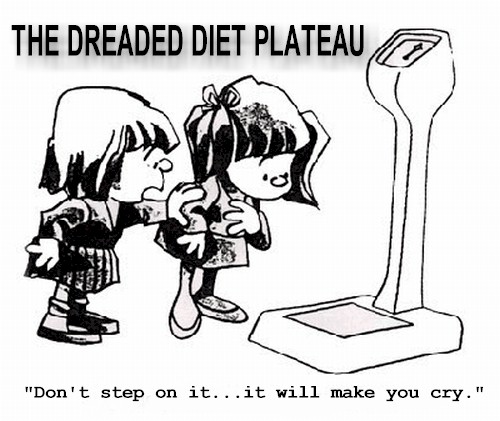
Day 2 of the Plateau Diet

The second day of my Plateau diet (see yesterday’s blog for info).  I lost 1.4 pounds since yesterday.  I am surviving ok.  I did it again today.  I think I should be good by tomorrow.  I want to lose minimally two pounds before I can go back to my normal 6 protein choices a day.  I can’t have fruit during plateau and my carb count is really low.  Coffee is my friend. 

Just remember.  In every diet, you will hit a point where you can’t lose.  Your body is happy with where you are at, even if you aren’t.  So, to break it, you have to do the plateau diet.  No sacrifice=no loss!

Image